

Metal-Interface takes great care to protect your privacy: when you submit a request or ask a question, your personal information is passed on to the supplier concerned or, if necessary, to one of its regional managers or distributors, who will be able to provide you with a direct response. Consult our Privacy Policy to find out more about how and why we process your data, and your rights in relation to this information. By continuing to browse our site, you accept our terms and conditions of use.

Water jet cutting
Technical article
In demanding sectors, such as the aerospace industry, where the cost of aluminium alloys (such as 2024 or 7075) is constantly rising, raw material management is a key driver of profitability. For sheet metal workers and subcontractors, one question remains: which cutting technology should be prioritised? Whilst milling has long been the standard due to its precision, waterjet cutting technology is now establishing itself as a viable alternative, particularly thanks to its superior nesting capabilities.
Lean Manufacturing
Guest columns
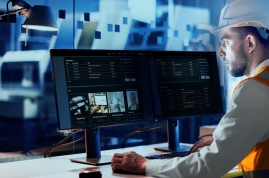
With the staggering advances in the field of Artificial Intelligence (AI) in recent years, the vision of the Autonomous Factory is moving a significant step closer. The interfaces required to connect individual systems within a production complex, as well as to the outside world, are already in place. By deploying AI, existing capabilities can be considerably expanded, allowing diverse manufacturing processes to be interconnected in highly efficient ways.
Raw material
Technical article
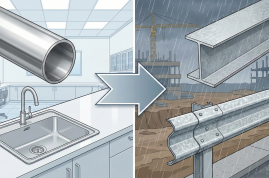
In the field of sheet metal working and metal construction, the choice of material is a crucial step that determines the longevity, strength, and final cost of a part. Faced with the risk of corrosion, two solutions often stand out to design offices and buyers: stainless steel and galvanized steel. Although both are designed to resist rust, their manufacturing processes, properties, and costs differ significantly. So, how do you make the right choice for your industrial projects? This detailed comparison helps you decide.
Welding technologies
Guest columns
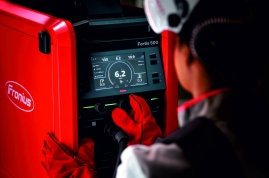
Even in this age of automation and cobots, manual welding remains an indispensable part of the metalworking industry. The reasons are obvious: no other process offers this much flexibility—whether in small workshops, on construction sites, or in industrial shift operations. At the same time, requirements are increasing: every seam must be perfect, standards and documentation requirements are growing, and the shortage of skilled workers is further exacerbating the situation.

Laser tube
Guest columns
The market for tube laser cutting is undergoing significant change. Suppliers of flatbed lasers are expanding their expertise and want to secure market share in this sector. The expansion from flat sheet laser cutting to tubes and profiles is a natural development for companies that are already known for their expertise in sheet metal processing, such as Bystronic. This step not only makes sense from a technical standpoint but is also strategically wise.
Lean Manufacturing
Guest columns
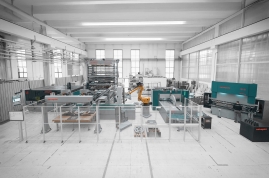
In many sheet metal departments today, the pattern is the same. Cutting systems never stop, bending is always a step behind, and assembly keeps asking the same question: where are my parts? Lead times shrink, product mix explodes, and everything seems to be urgent at the same time.
3D Laser cutting
Guest columns
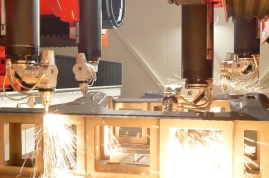
In automotive manufacturing, every second and every square meter counts. As mobility evolves through electrification, lightweighting, and modular vehicle design, car body production is transforming. The rise of giga factories has redefined industrial scale, setting new standards for productivity and automation. Inspired by this evolution, the concept of “giga efficiency” can be seen as the next step: a synergy between space optimization and time performance that maximizes output within a compact, highly integrated environment.
Ecology
Guest columns
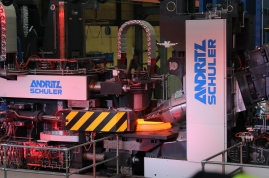
EU regulations aimed at improving sustainability are having the opposite effect because they tie up too many resources in companies.
By Thomas Kamphausen, CFO ANDRITZ Schuler GmbH
Welding technologies
Guest columns
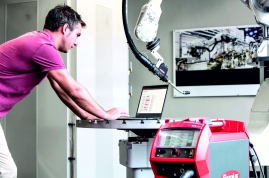
The digital transformation has fundamentally changed industrial manufacturing – including welding technology. Despite initial reluctance, the industry is catching up. The reason for the delay is not a lack of willingness to innovate, but rather the high complexity of the welding process: The electric arc combines numerous physical influencing factors – from material properties and component geometries to environmental conditions.
Merci ! Votre demande a bien été envoyée.


